
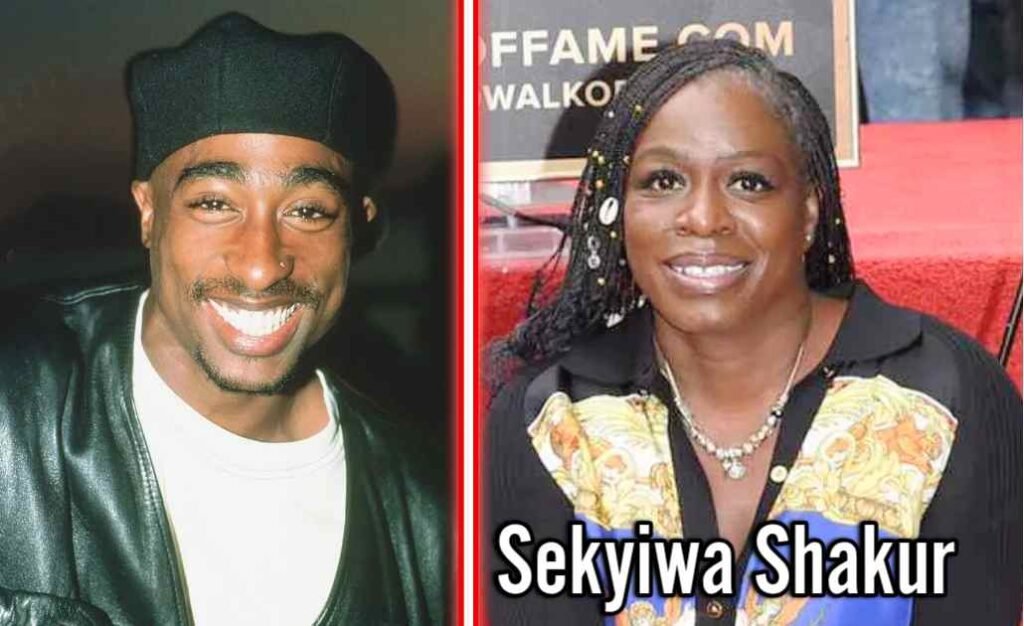

Sekyiwa Shakur is an American philanthropist, mental health and wellness advocate, and community leader best known as the younger half-sister of Tupac Shakur. Although her family name is recognised across the world, she has largely avoided the celebrity lifestyle. Her public work is centred on healing, creative expression, youth development and the responsible preservation of her family’s cultural contribution.
The story of Sekyiwa Shakur is both inspiring and painful. It is positive because she has turned grief and personal struggle into practical service, yet it also contains the negative reality of family loss, trauma and public pressure. Rather than building a career in music, she developed a quieter role that connects the Shakur legacy with education, emotional support and community action.
Quick Bio
| Detail | Information |
|---|---|
| Full name | Sekyiwa Shakur |
| Nickname | Set |
| Date of birth | 3 October 1975 |
| Age in 2026 | 50 years |
| Nationality | American |
| Mother | Afeni Shakur |
| Father | Mutulu Shakur |
| Half-brother | Tupac Shakur |
| Profession | Philanthropist, community leader and mental health advocate |
| Known role | President of the Tupac Amaru Shakur Foundation |
| Public social handle | @wildseed13 |
Early Life and Family Background
Sekyiwa Shakur was born into a family whose history was closely connected with political activism, Black liberation movements and community organising. Her mother, Afeni Shakur, was known for her involvement with the Black Panther Party and later became a businesswoman, philanthropist and determined protector of Tupac’s artistic estate. Her father, Mutulu Shakur, was an activist and an advocate of community-based health work.
Her childhood unfolded during financial uncertainty and frequent change. The family lived in New York and later spent time in Baltimore and California. These moves exposed the children to different communities, creativity and hardship. Those experiences later influenced the way Sekyiwa Shakur approached youth support, trauma and emotional wellbeing.
Growing Up Beside Tupac Shakur
Tupac and his younger sister shared the same mother and spent important parts of their childhood together. Before he became an international rapper and actor, he was simply her older brother, a creative and ambitious young man developing an interest in poetry, acting, music and social issues. Their relationship connected her private family memories with a public figure who later became one of hip-hop’s most influential voices.
Tupac occasionally referred to his sister by her nickname, Set, helping listeners recognise her name even though she stayed outside entertainment. Sekyiwa Shakur has spoken about witnessing his talent before the world recognised him. Her perspective presents Tupac as a family member as well as a cultural icon.
Family Influence and Personal Identity
Afeni Shakur had a powerful influence on both of her children. Her political history, resilience and later work managing Tupac’s legacy created a family environment in which art and activism were closely linked. The values associated with speaking against injustice, protecting vulnerable communities and using creativity for social change continued to shape the work undertaken by Sekyiwa Shakur in adulthood.
Carrying a famous surname also created pressure. She wanted space to understand herself beyond being Afeni’s daughter or Tupac’s sister. Maintaining privacy was not a rejection of her family; it allowed her to build an identity based on her own experiences, responsibilities and service.
The Loss of Tupac and Its Lasting Effect
Tupac Shakur died in September 1996 after being shot in Las Vegas. His death at the age of 25 affected music, popular culture and millions of admirers, but for his sister it was first a devastating personal loss. Sekyiwa Shakur was still a young woman when she had to process the death of a brother whose career and public image had become larger than life.
The tragedy placed new emotional weight on the family. Tupac’s recordings, poetry and social messages remained part of global culture. Over time, Sekyiwa Shakur became more visible in protecting the human meaning behind his legacy and reminding audiences that he wanted young people to express themselves creatively.
Start of Career and Foundation Leadership
The principal organisation associated with her career is the Tupac Amaru Shakur Foundation. Afeni Shakur founded the organisation in 1997, initially under the name Shakur Family Foundation, to provide quality arts training and opportunities for young people. Its early work included performing arts programmes covering acting, dance, poetry, creative writing, vocal technique and stage production.
Sekyiwa Shakur developed more than two decades of experience in family outreach, programme coordination and youth creative arts development. Her work did not begin as a conventional celebrity career. It grew through practical involvement with families, young people and community programmes. She later became president of the foundation and helped guide its mission after the death of Afeni Shakur in 2016.
Creative Arts and Youth Development
Creative education remains central to the foundation. Its programmes give young people a safe place to build confidence, communicate their experiences and explore artistic skills. This reflects Tupac’s use of poetry, acting and music to discuss poverty, inequality, family life and social conflict.
Under the leadership of Sekyiwa Shakur, the organisation has continued to connect creativity with personal development. The foundation reports that it has served young people for more than twenty years through workshops and enrichment experiences. Its broader approach presents the arts not simply as entertainment, but as a practical tool for confidence, communication and positive community participation.
Mental Health and Wellness Advocacy
Mental health has become one of the strongest themes in her public work. She has spoken openly about living through depression, social anxiety, suicidal thoughts and periods of hospital treatment. She has also described therapy as an important part of understanding trauma and developing healthier ways to respond to difficult experiences. These disclosures give her advocacy a personal foundation rather than making it a purely professional campaign.
Sekyiwa Shakur has argued that emotional pain must be addressed before it develops into destructive behaviour. Through the foundation, she has supported conversations about trauma, grief, family stress and the barriers that prevent Black communities from obtaining suitable care. Her message encourages people to treat mental wellness as a real community need and to respond to suffering with informed, compassionate support.
Complete Career Overview
Her career combines non-profit leadership, youth advocacy, family outreach and protection of a major cultural legacy. She is not a recording artist, actress or entertainment executive. Her influence comes from connecting the social ideas behind Tupac’s work with programmes that address current needs.
Sekyiwa Shakur also represents the family at carefully selected cultural events. These appearances allow her to speak about Tupac’s ambitions, character and influence without turning her private life into constant public entertainment. Her leadership style is based on personal testimony, emotional honesty and the belief that communities require both creative opportunities and access to healing resources.
Public Appearances and Recent News
One of her most widely reported appearances took place in June 2023, when Tupac received a posthumous star on the Hollywood Walk of Fame. Sekyiwa Shakur accepted the honour on behalf of the family and delivered an emotional speech about watching her brother’s greatness develop. The ceremony placed her at the centre of a major public celebration while allowing her to describe Tupac from the viewpoint of a younger sister.
In May 2026, she appeared at Camden Yards during a Baltimore Orioles game held alongside a Tupac bobblehead promotion. She threw the ceremonial first pitch as the stadium celebrated the rapper’s connection with Baltimore and Oakland. The event showed how Tupac’s influence continues to move beyond music and how his sister remains an important family representative at public tributes.
Social Media and Public Voice
Sekyiwa Shakur uses the public handle @wildseed13, where her profile identifies her with philanthropy, activism, mental health and wellness advocacy. Her online presence supports her public mission while remaining more personal and selective than the highly commercial accounts commonly associated with entertainment celebrities.
The Tupac Amaru Shakur Foundation also maintains its own social channels under the handle @4tasf. These platforms share information about community programmes, outreach, fundraising, cultural remembrance and mental wellness. Together, the accounts give supporters a clearer view of her work without requiring her to reveal every part of her private life.
Legacy and Cultural Importance
The legacy of Sekyiwa Shakur is developing through service rather than musical fame. She has helped keep her brother’s name connected with creative education, mental health, conflict resolution and opportunities for underserved young people. This work protects Tupac’s memory from being reduced only to record sales, controversy or the circumstances of his death.
Her importance also lies in her honesty about grief and emotional wellbeing. By discussing personal struggle, she challenges the idea that strength means hiding pain. Sekyiwa Shakur shows that preserving a legacy can mean creating safer spaces and helping the next generation find its voice.
Conclusion
Sekyiwa Shakur has built a meaningful public role as a philanthropist, advocate and president of the Tupac Amaru Shakur Foundation. Her life has been shaped by an extraordinary family history, the loss of her brother and mother, and the responsibility of representing a name that remains deeply influential in global culture.
She has responded to that responsibility by focusing on youth, art, healing and community support. Although she values privacy, her selected public appearances and advocacy reveal a leader committed to transforming painful experiences into constructive action. Her journey shows that a powerful legacy is not only remembered; it is also renewed through work that improves the lives of others.
FAQ
Who is Sekyiwa Shakur?
Sekyiwa Shakur is an American philanthropist, mental health advocate and community leader. She is Tupac Shakur’s younger half-sister and serves as president of the Tupac Amaru Shakur Foundation.
What is Sekyiwa Shakur known for?
She is known for preserving Tupac’s cultural legacy, leading charitable and youth-focused programmes, promoting creative arts education and supporting public conversations about trauma and mental wellness.
Who are her parents?
Her mother was Afeni Shakur, an activist and founder of the Tupac Amaru Shakur Foundation. Her father was Mutulu Shakur, an activist associated with community health and Black liberation work.
What does the Tupac Amaru Shakur Foundation do?
The foundation supports young people and underserved communities through creative arts education, enrichment activities, mental health awareness and initiatives that encourage peaceful conflict resolution.
Did she accept Tupac’s Hollywood Walk of Fame star?
Yes. In June 2023, she accepted Tupac Shakur’s posthumous Hollywood Walk of Fame star on behalf of the family and spoke about his talent, dreams and lasting cultural importance.
Read this too: Eben Russell: The Brilliant Writer Behind Modern Television Comedy